
Old Sun Community College Third Floor
The Third Floor of Old Sun Community College (OSCC). Click on the triangle to load the point cloud. Labels on the point cloud indicate past room functions during Old Sun’s time as a residential school. Important rooms on this floor include the junior boys and girls dormitories and the boys and girls Infirmary.

“When the school is on the reserve, the child lives with its parents, who are savages, and though he may learn to read and write, his habits and training mode of thought are Indian. He is simply a savage who has learned to read and write.” – Sir John A. MacDonald, 1879
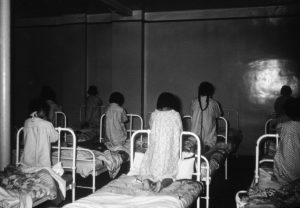
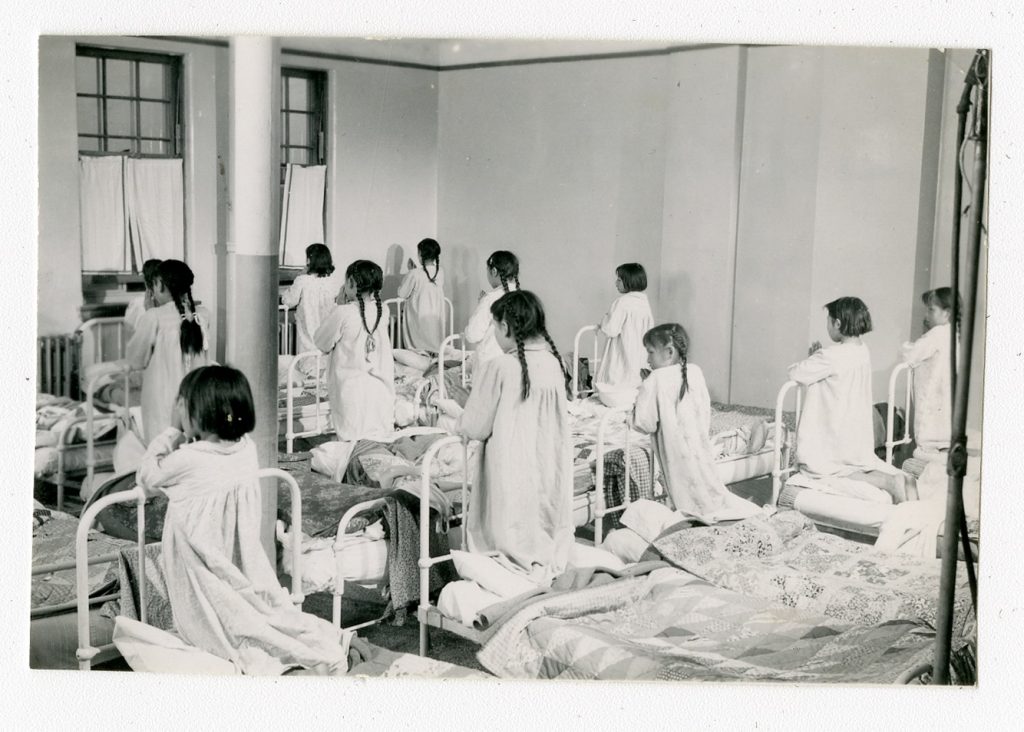
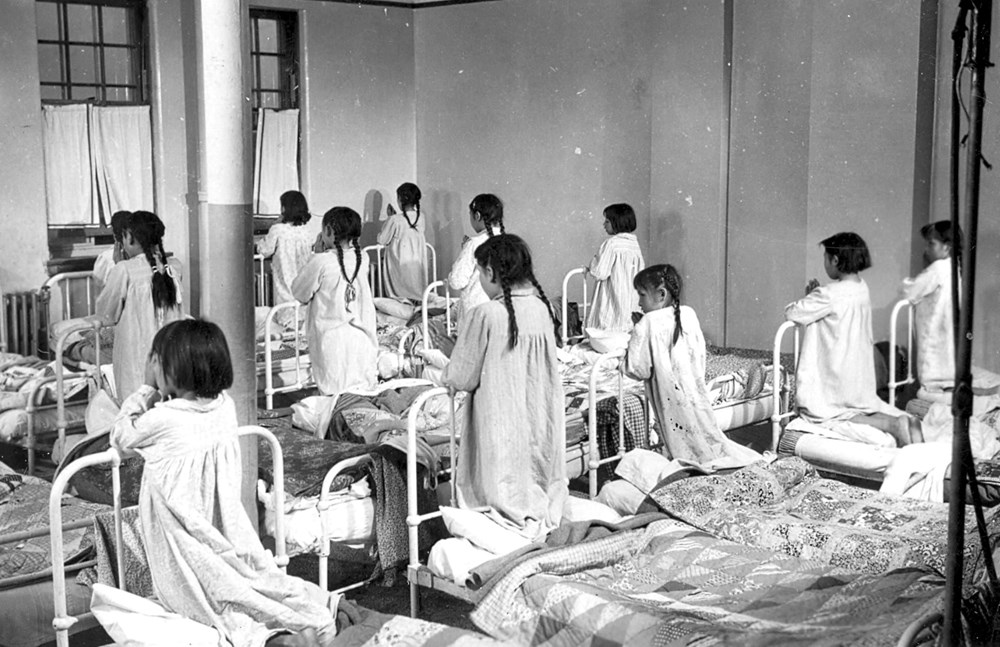
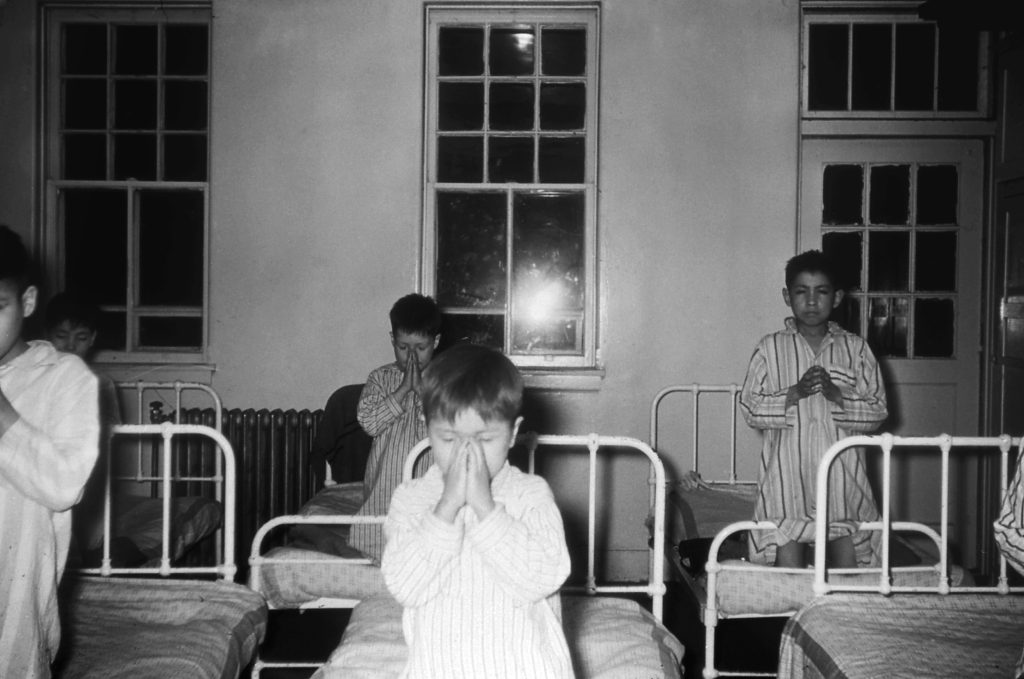
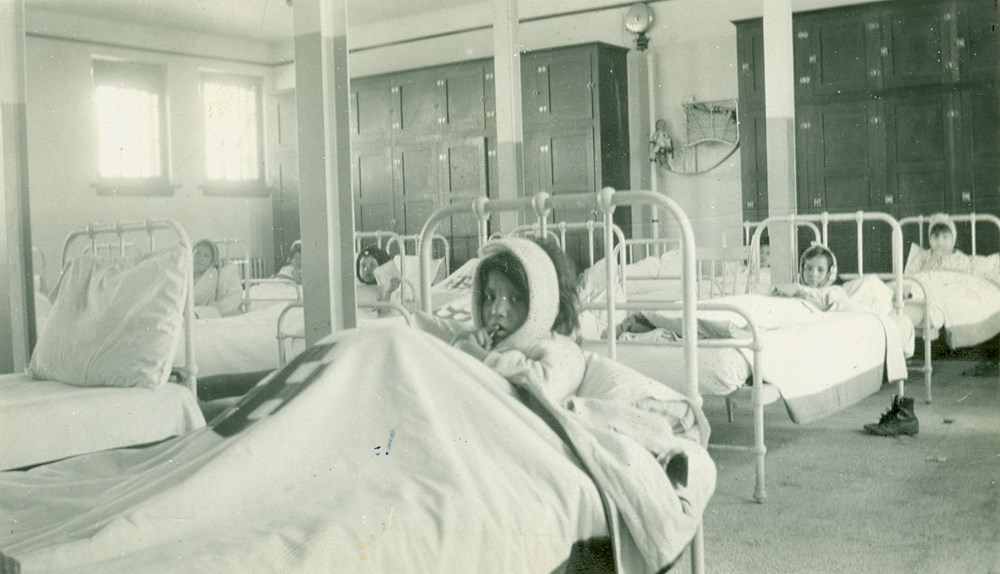
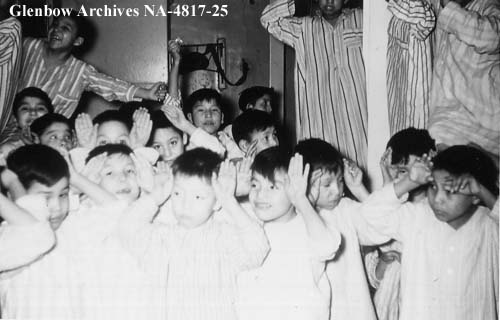
Residences for both staff and students were located on the third floor during the years Old Sun operated as a residential school. An infirmary and nursing station was also situated here. The junior boys’ dormitories could be found on the south side and the girls on the north. Students between the ages of 4 and 13 stayed in the school’s junior residences. The number of beds in these dorms likely changed through the years, but to accommodate the maximum capacity of 142 students in the 1960s the dorms would have had around 30 beds (see the section “Overcrowding” below).
There was a small sink and a bathroom attached to each dormitory, and a series of storage cupboards were placed along the walls adjacent to the doorway. Upon arriving at the school, children were stripped of their personal belongings and assigned a number with corresponding school uniform. The clothing worn by the children to the school would be bundled up and stored in the wall cupboards until the children returned home.
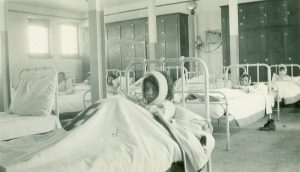
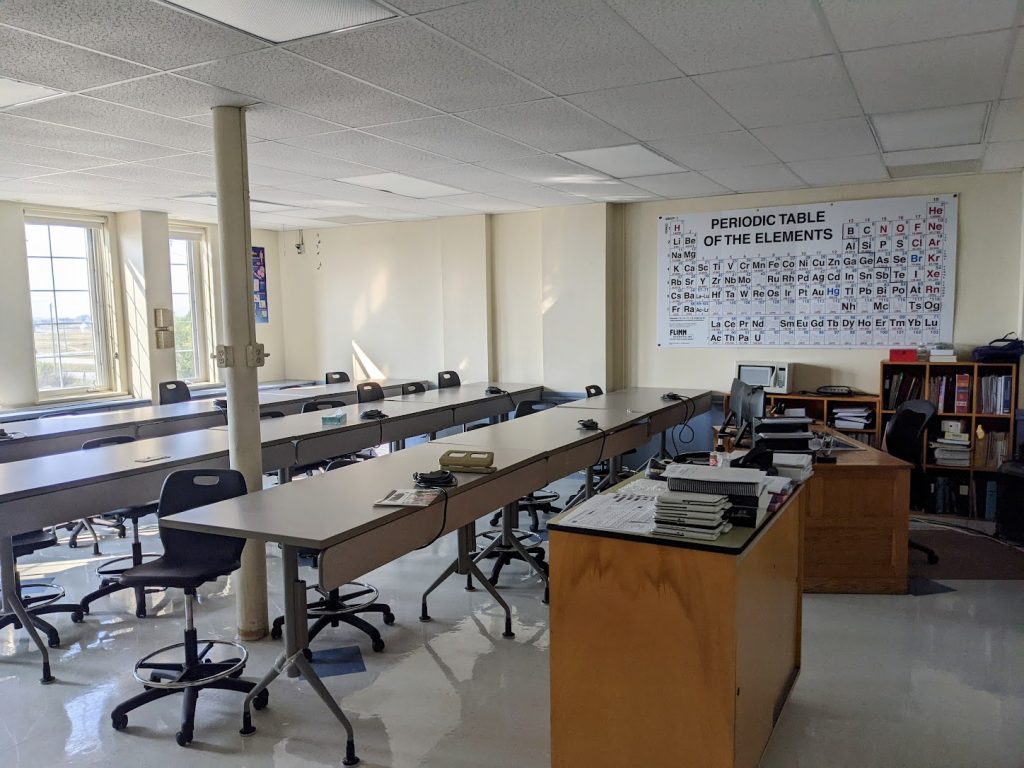
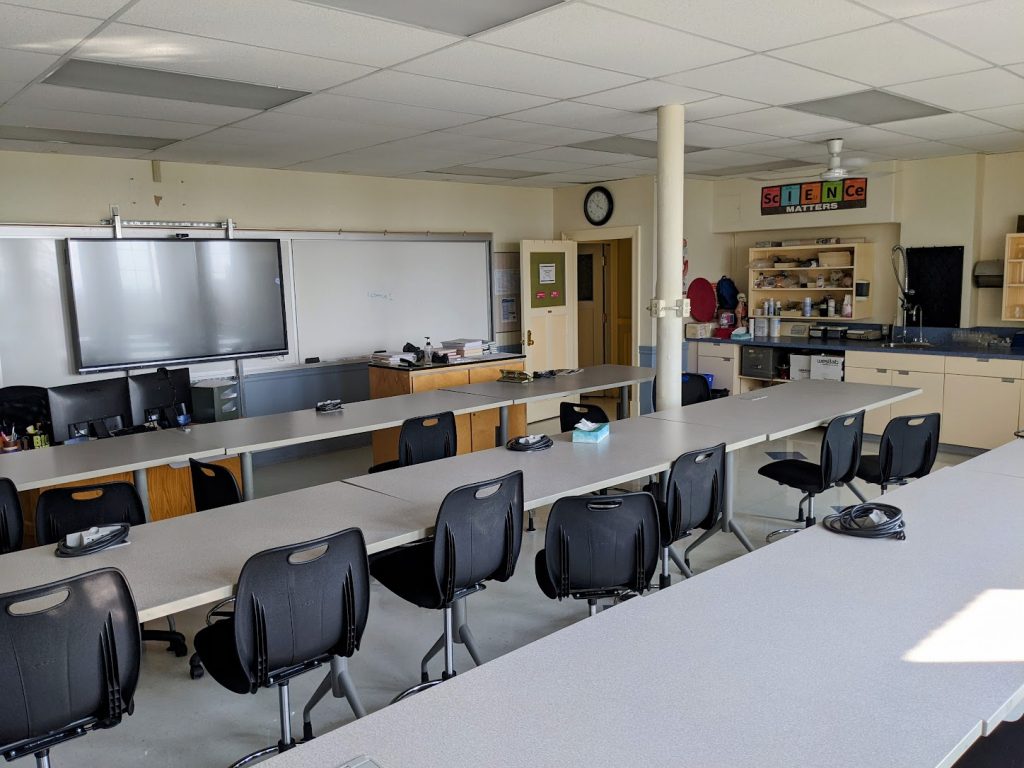
The dormitories on either end of this floor have since been divided into two classrooms. During Old Sun’s time as a residential school, however, they would have each been one single large room. Adjacent to each dormitory was a bedroom for a staff member. These bedrooms had a window that looked upon the dormitory so that staff could monitor the behavior of students. Rooms located further down the hallway were used as staff quarters along with the dispensary/infirmary (see point cloud and VR tour). If students were sick, they were kept isolated in the infirmary – sometimes for as long as several months.
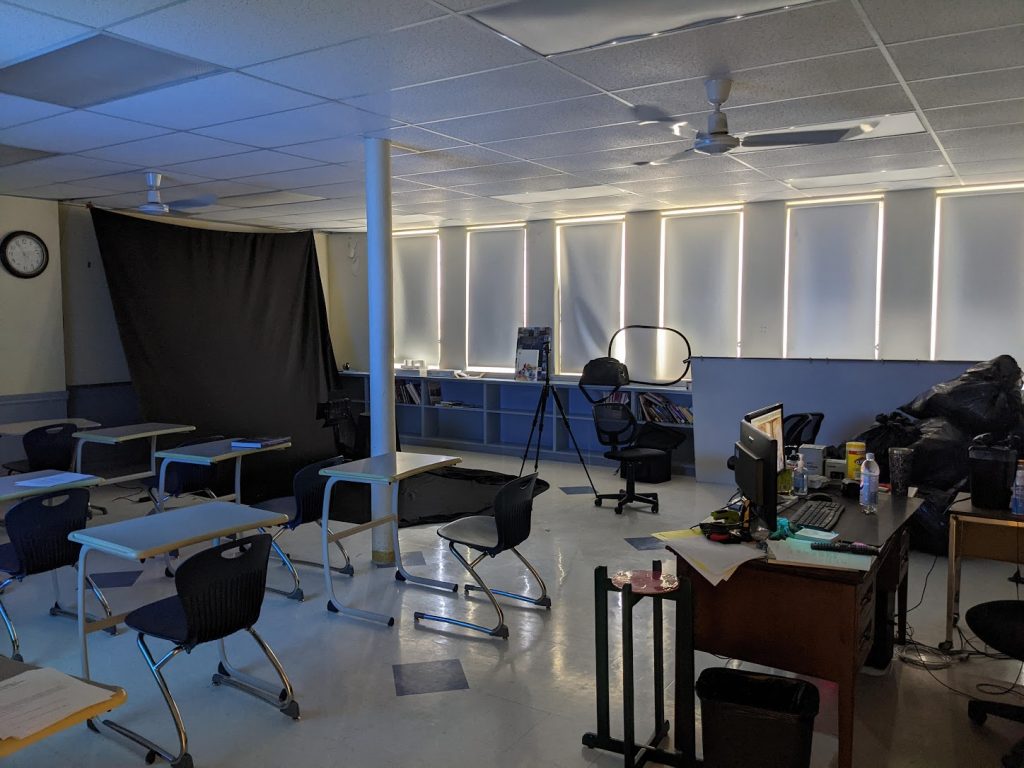
Today, the rooms on this floor are used for teaching classrooms for the college, staff offices, and the staff room.
Notes:
The content of this page is pending approval by Old Sun Community College.
Left click and drag your mouse around the screen to view different areas of each room. If you have a touch screen, simply drag your finger across the screen. Your keyboard's arrow keys can also be used. Travel to different areas of the third floor by clicking on the floating arrows.
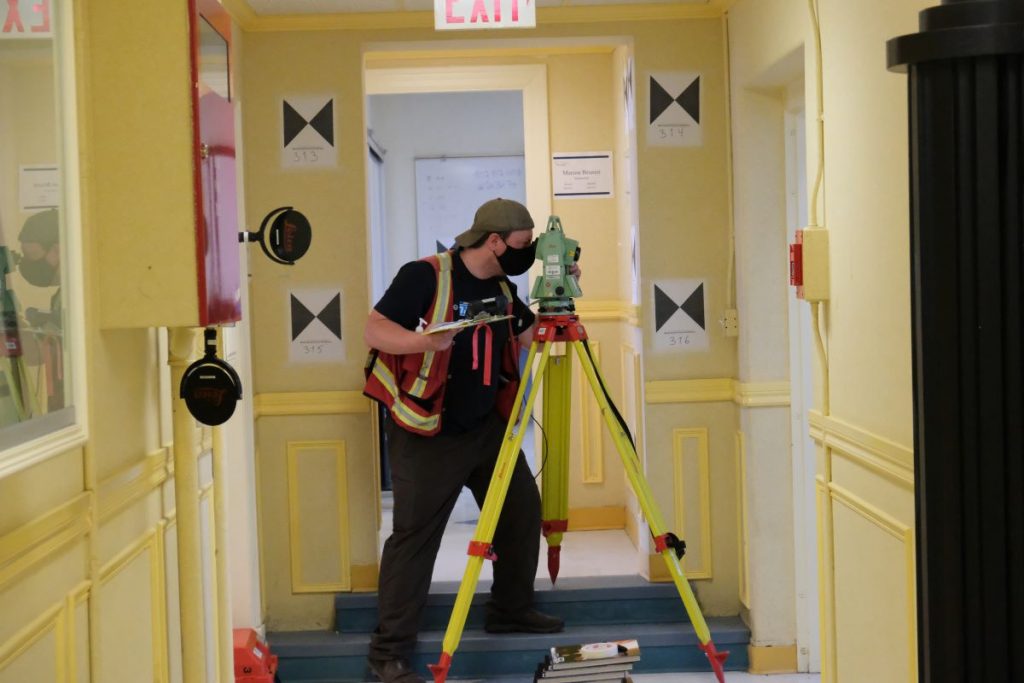
This image gallery shows historic and modern photos of Old Sun College's third floor. Click on photos to expand and read their captions. If you have photos of the third floor at Old Sun that you would like to submit to this archive, please contact us at irsdocumentationproject@gmail.com.
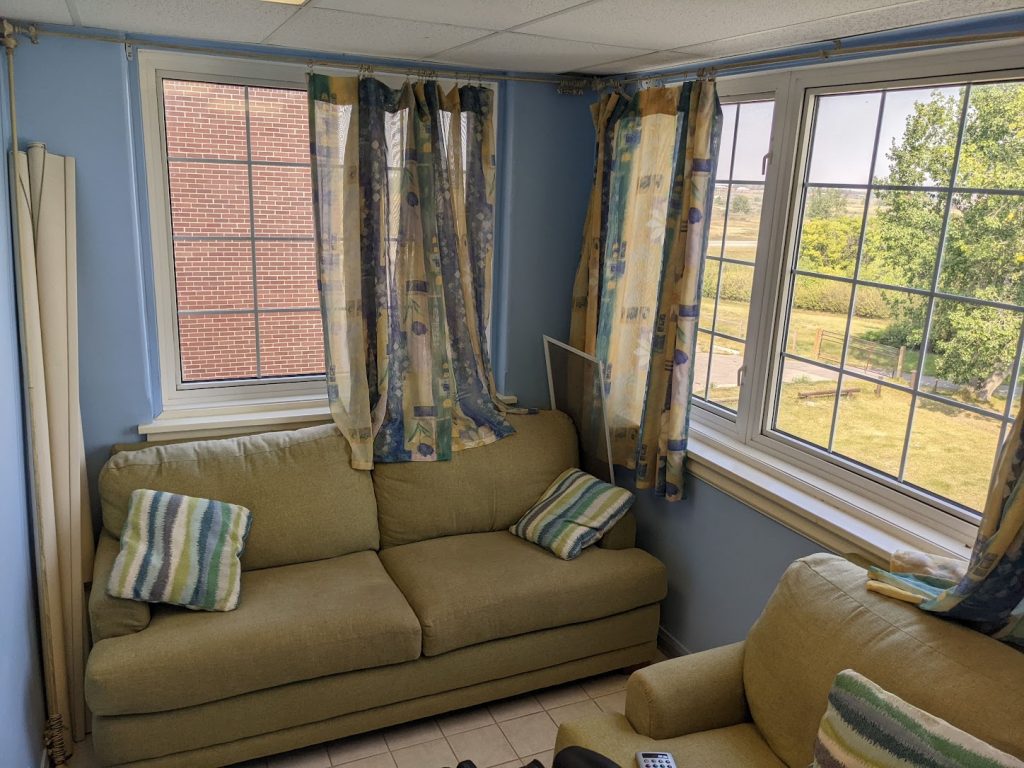
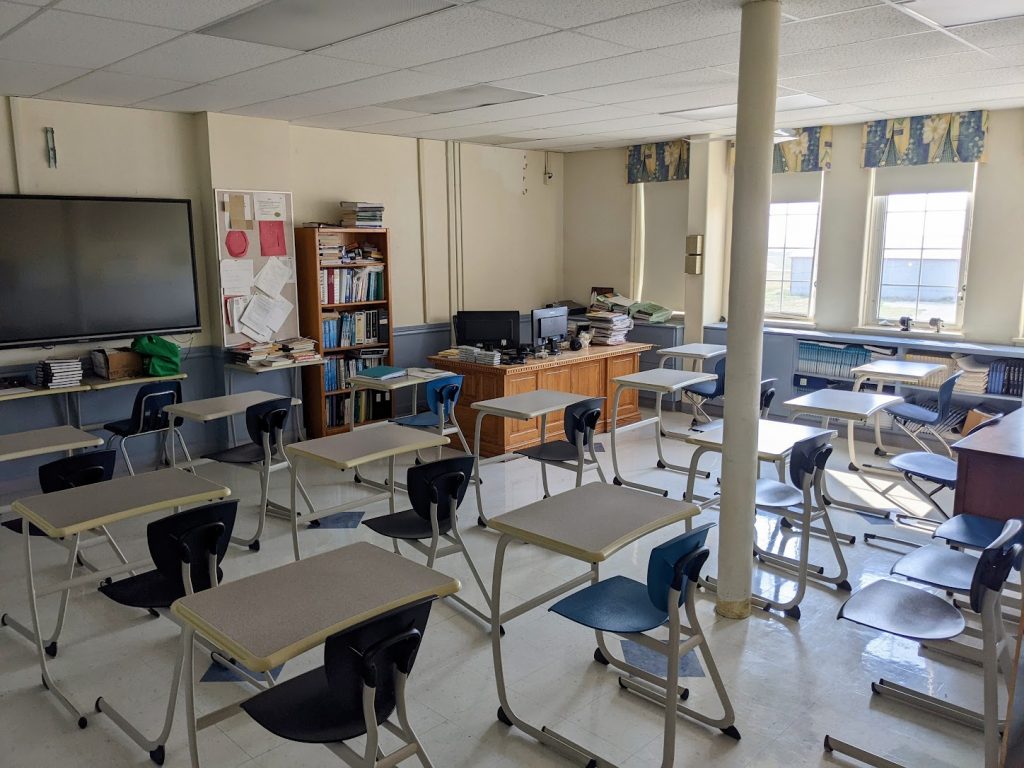
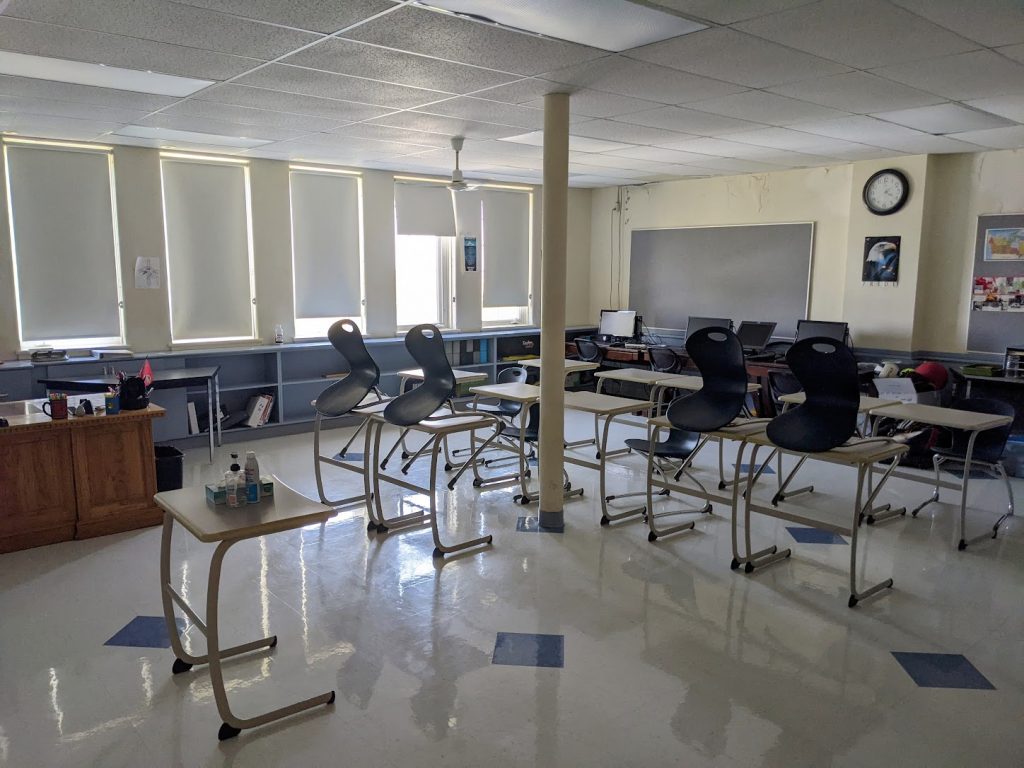
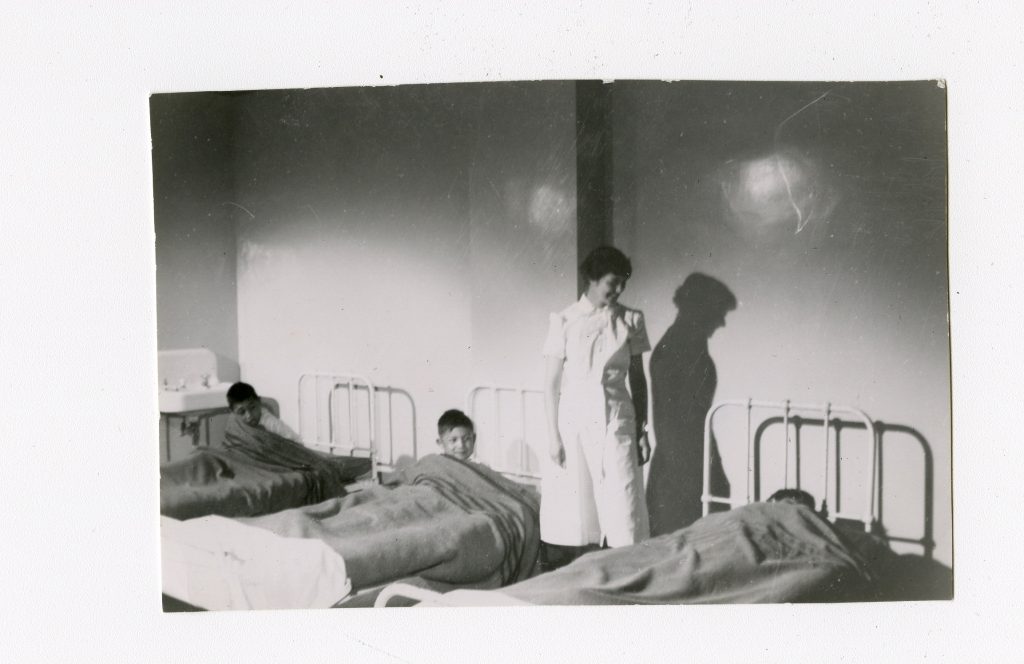
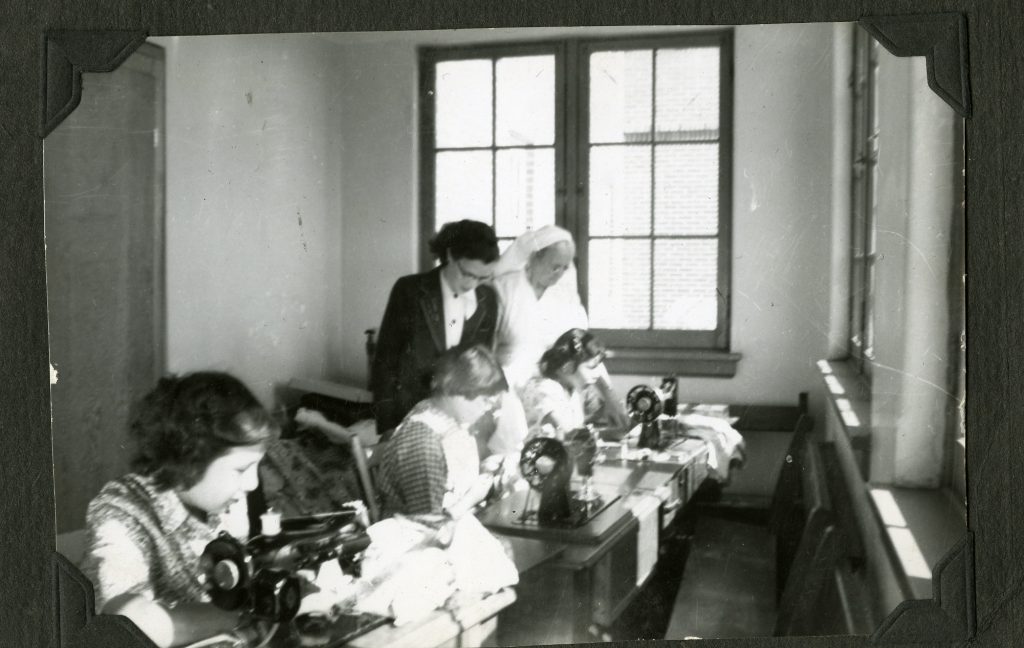
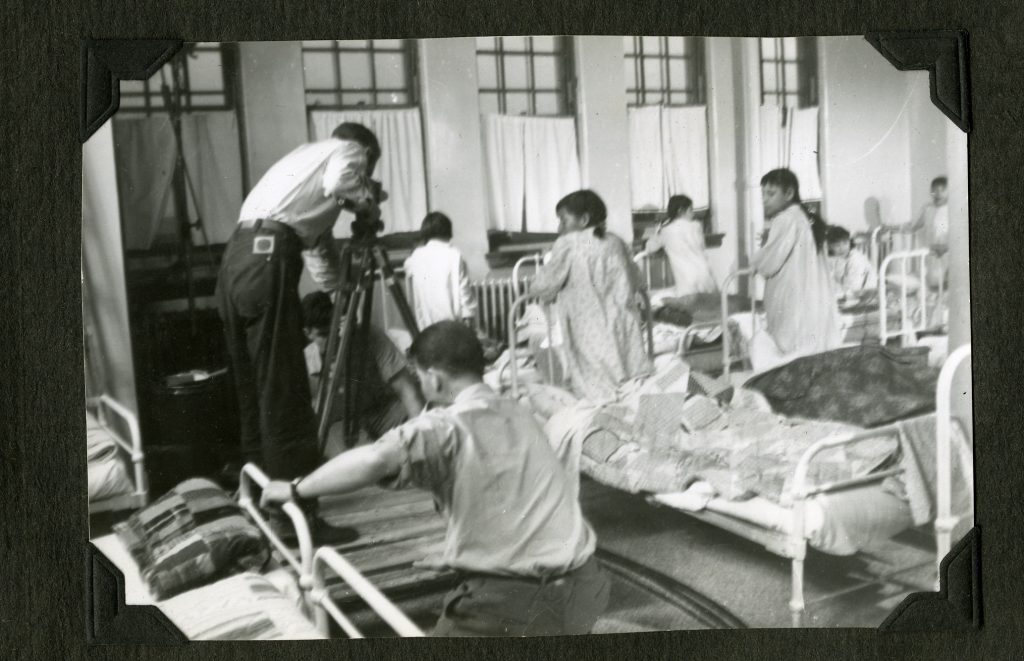
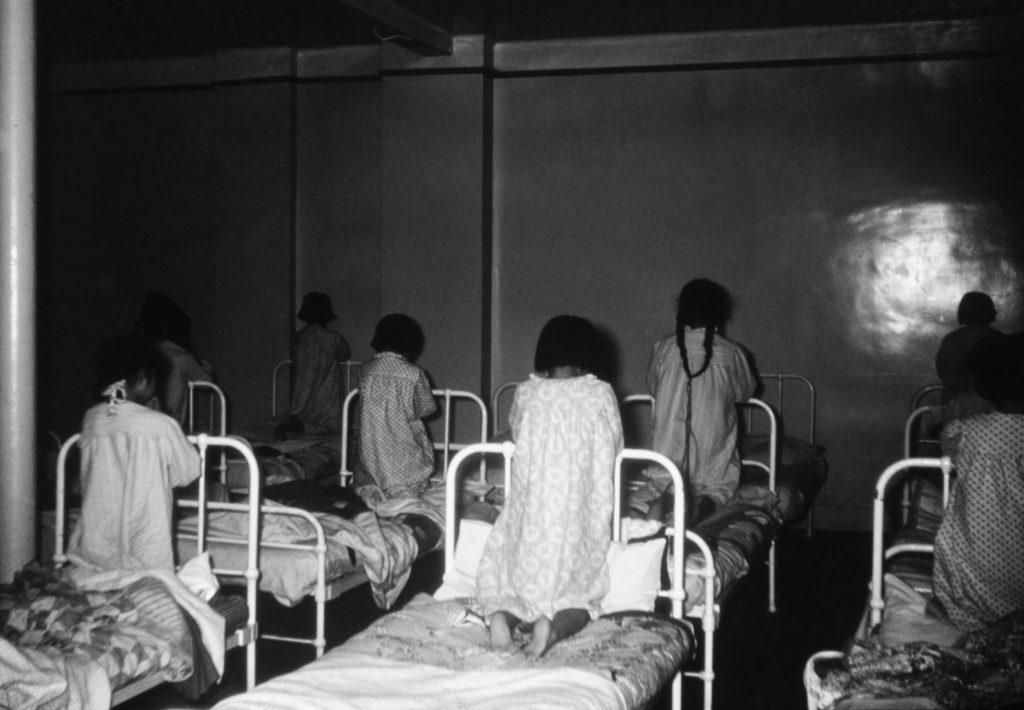
![Junior boys resting - [193-?]. P75-103-S7-167. The General Synod Archives, Anglican Church of Canada](https://irs.preserve.ucalgary.ca/wp-content/uploads/P75-103-S7-167.jpeg)
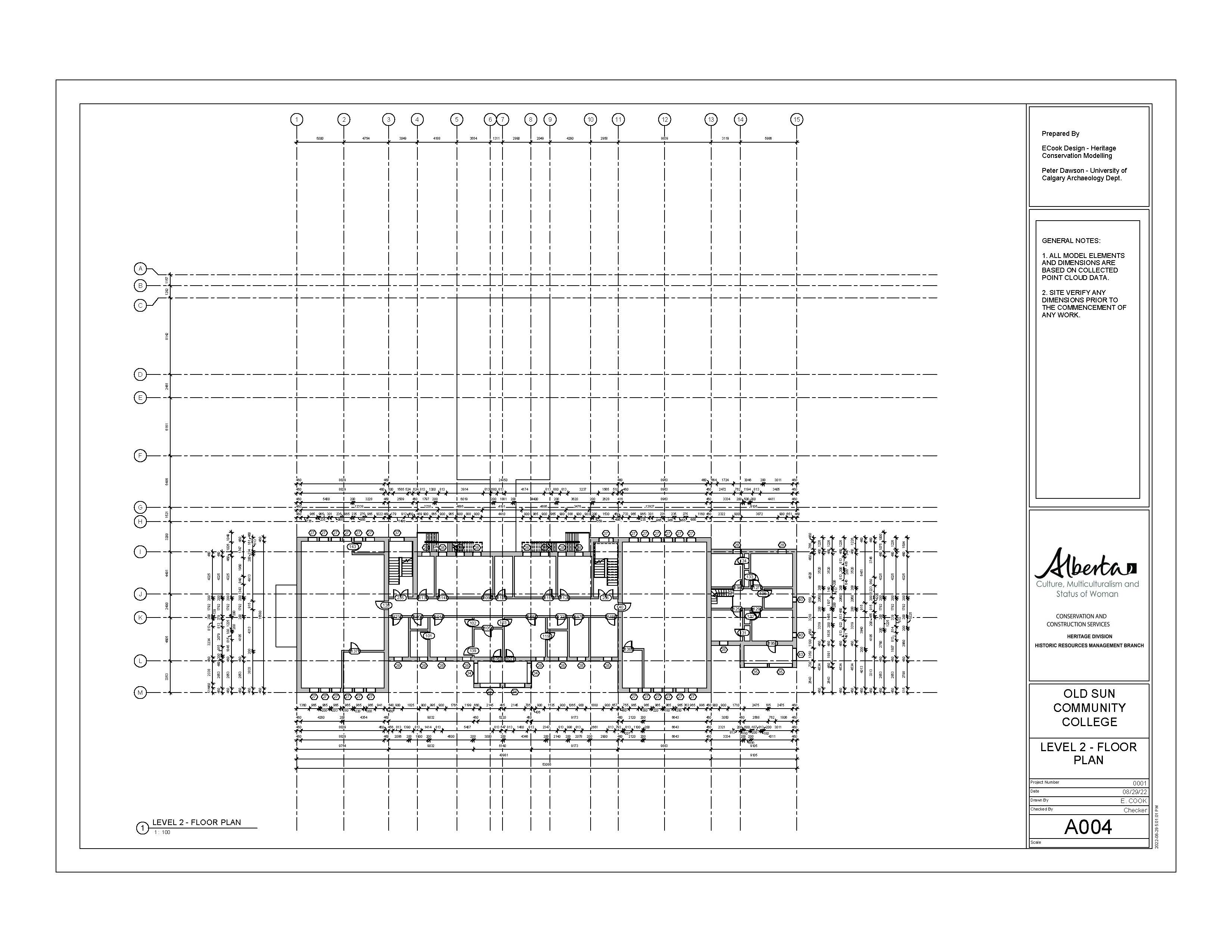
Laser scanning data can be used to create “as built” architectural plans which can support repair and restoration work to Old Sun Community College. This plan was created using Autodesk Revit and forms part of a larger building information model (BIM) of the school. The Revit drawings and laser scanning data for this school are securely archived with access controlled by the Old Sun Advisory Committee.
Some of the threats faced by Indigenous students attending residential schools came from the buildings themselves. The architectural plans contained in this archive, which have been constructed using the laser scanning data, illustrate how poorly these schools were designed from a safety perspective. There were three specific areas that placed the health and safety of students at great risk: Fire Hazards and Protection Measures; Water Quality, and Sanitation and Hygiene. As you explore the archive, you will find more information about the nature of these hazards and their impact on students.
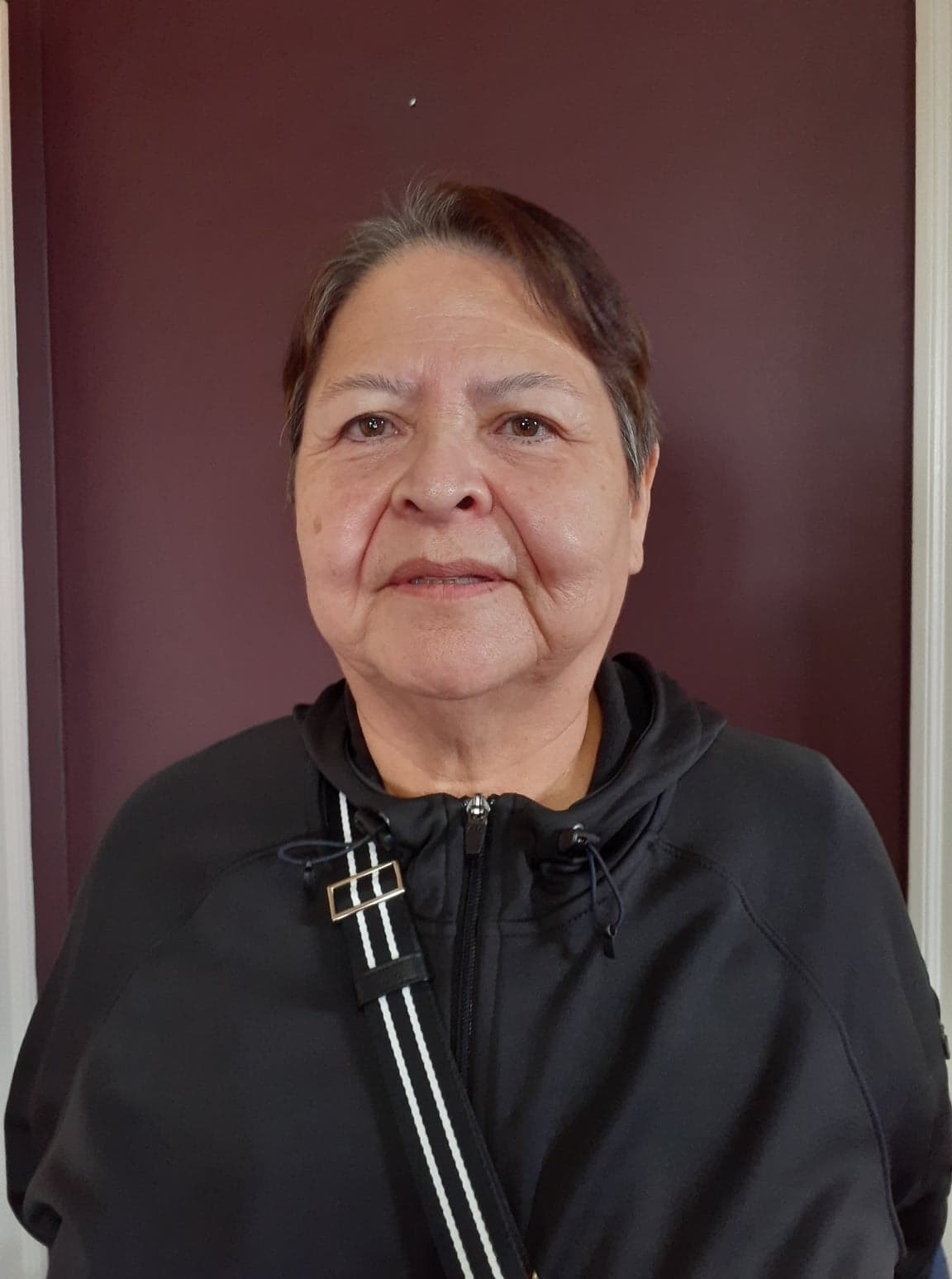
Celeste Bull Bear- On My Forearm, That’s Where I Got Strapped
When I was going to school, I was a residential but I was going to school here. And I got strapped by the teacher because I wasn’t listening. I was fooling around and she strapped me with that, it was like, a big ruler. That’s what she used on me. Not on my palms but on my forearm, that’s were I got strapped.
– Celeste Bull Bear (Bear Chief)
Notes:
Oral interview with Celeste Bull Bear (Bear Chief). Conducted, translated, and transcribed by Gwendora Bear Chief. Old Sun Community College, March 28, 2022.
Explore Floors and Rooms
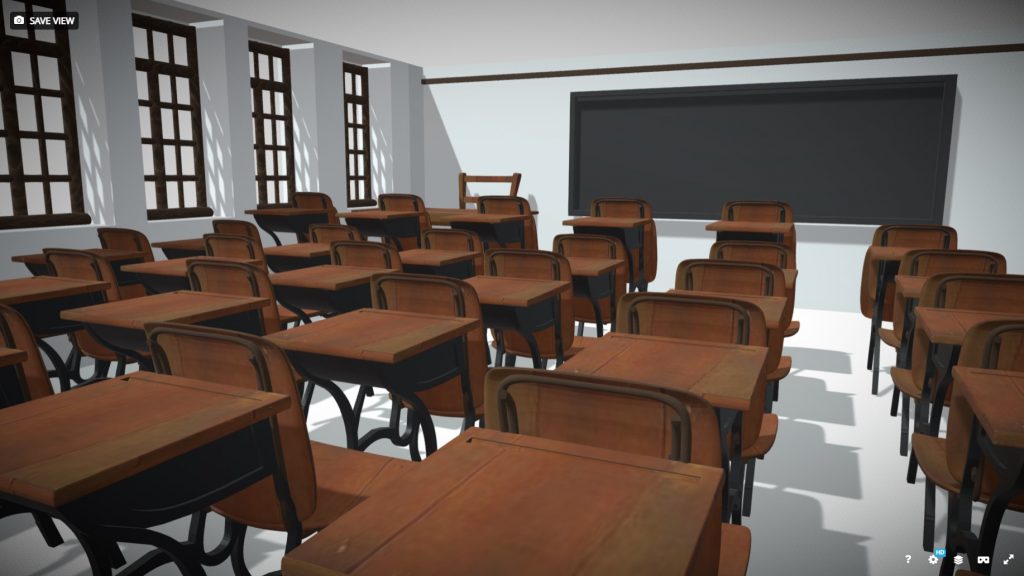
Old Sun Classroom
This computer reconstruction approximates how clas…
Read more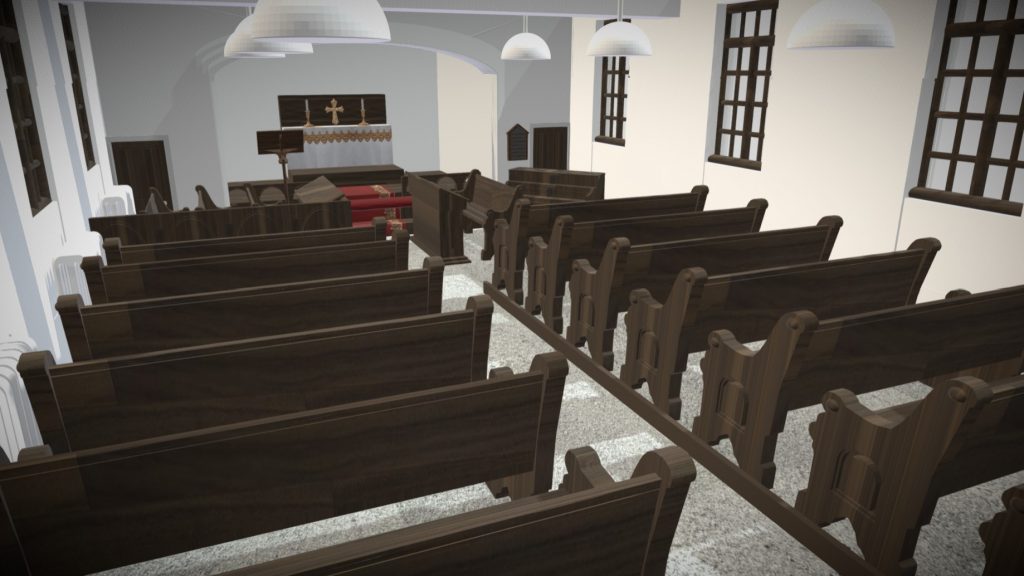
Old Sun Chapel
This computer reconstruction approximates how the…
Read more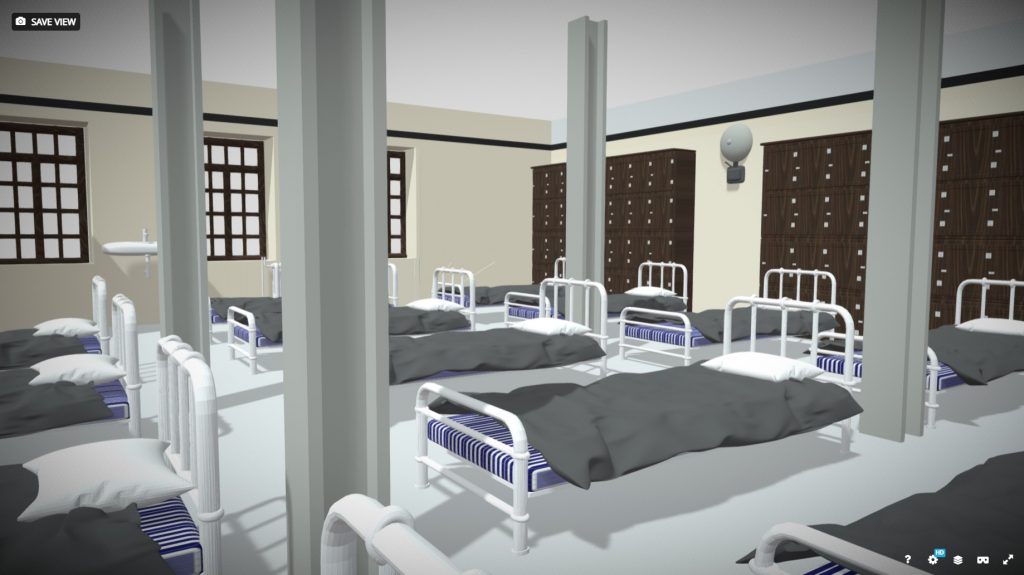
Old Sun Junior Dormitories
This computer reconstruction approximates how the…
Read more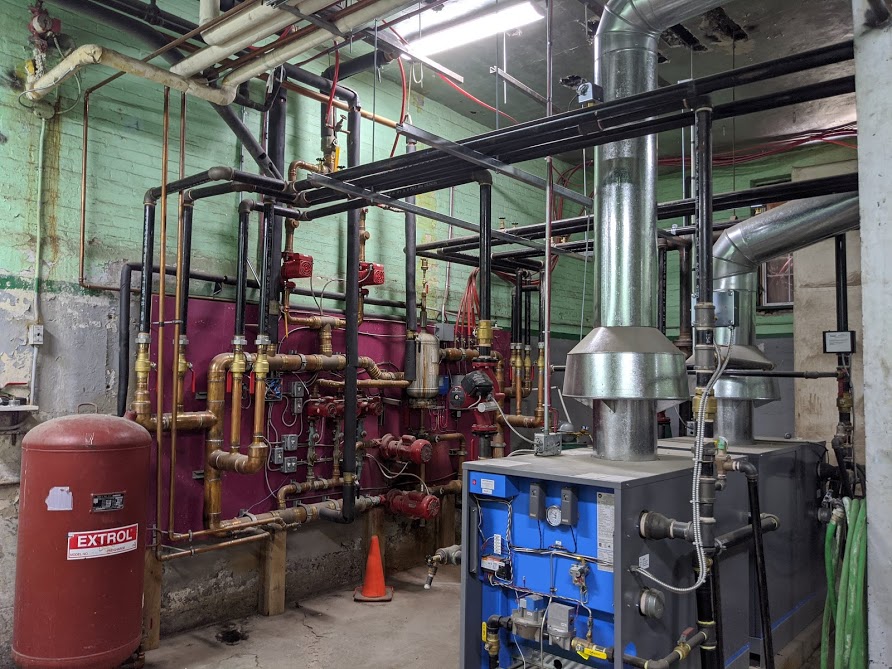
Old Sun Boiler Room
The boiler room and former coal shoot at Old Sun C…
Read more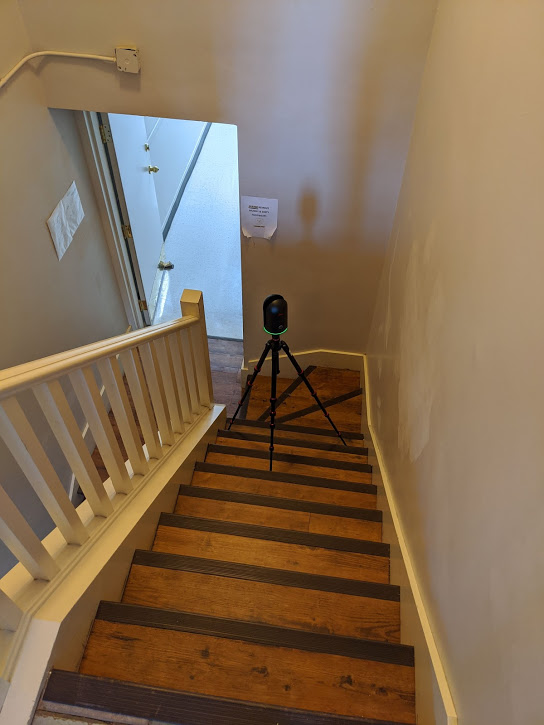
Old Sun Annex
The Annex at Old Sun Community College. This Area…
Read more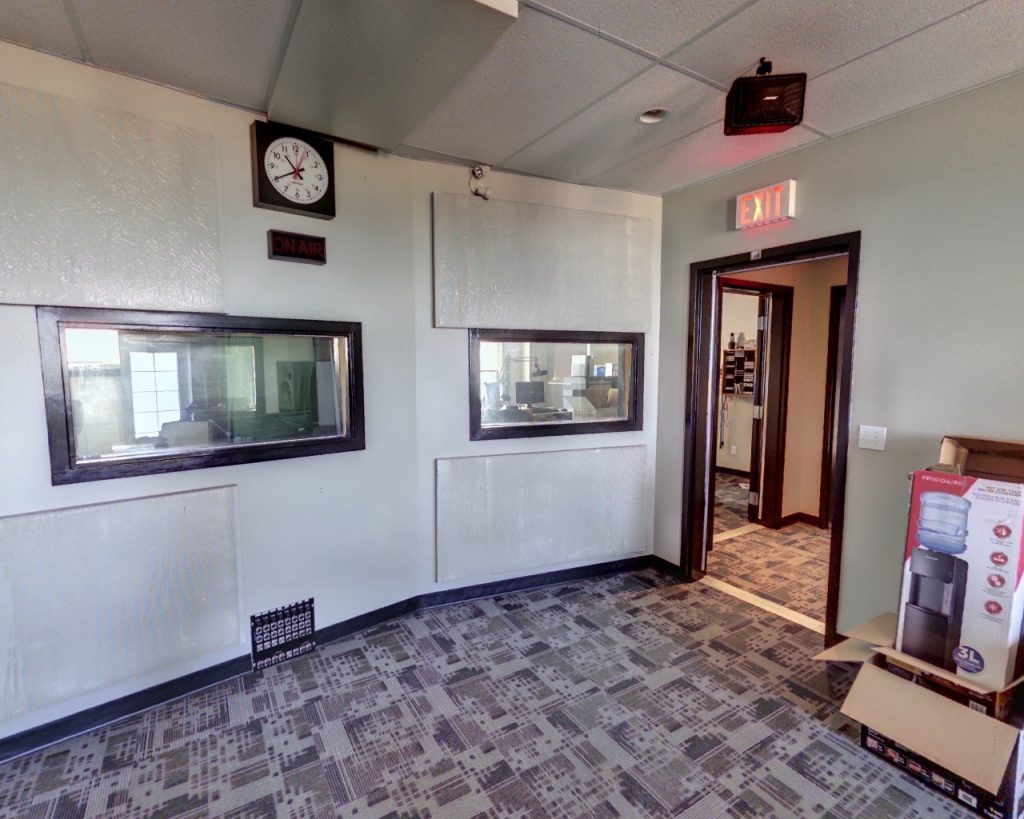
Old Sun Community College Fourth Floor
The Fourth Floor of Old Sun Community College (OSC…
Read more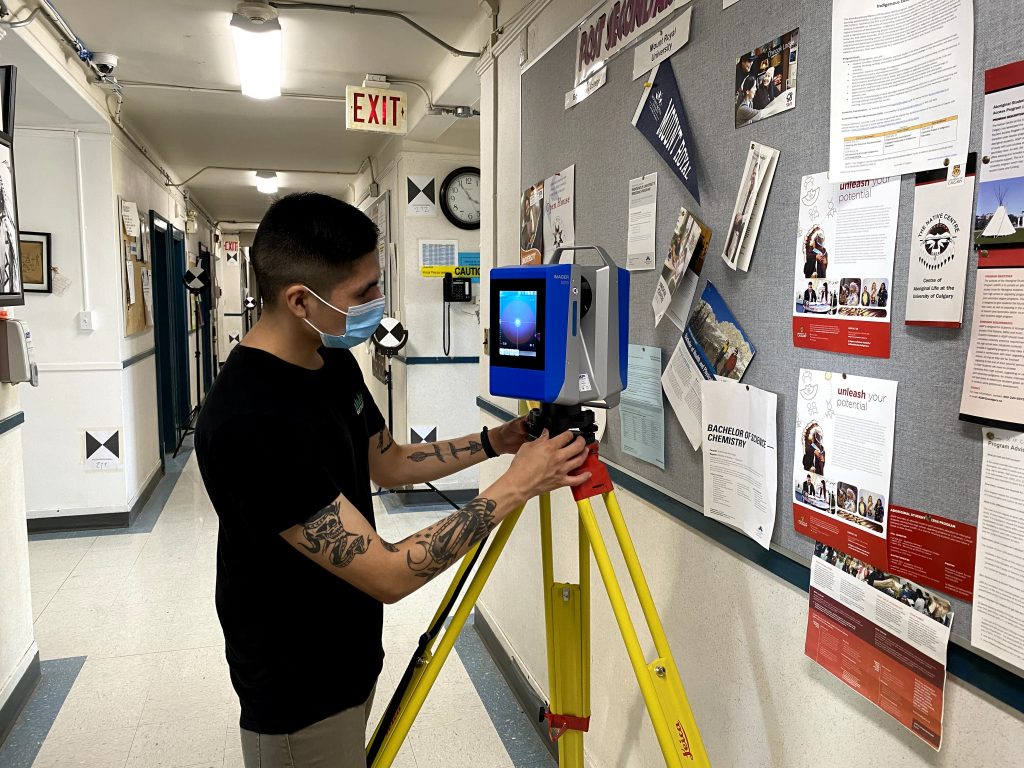
Old Sun Community College Second Floor
The Second Floor of Old Sun Community College (OSC…
Read more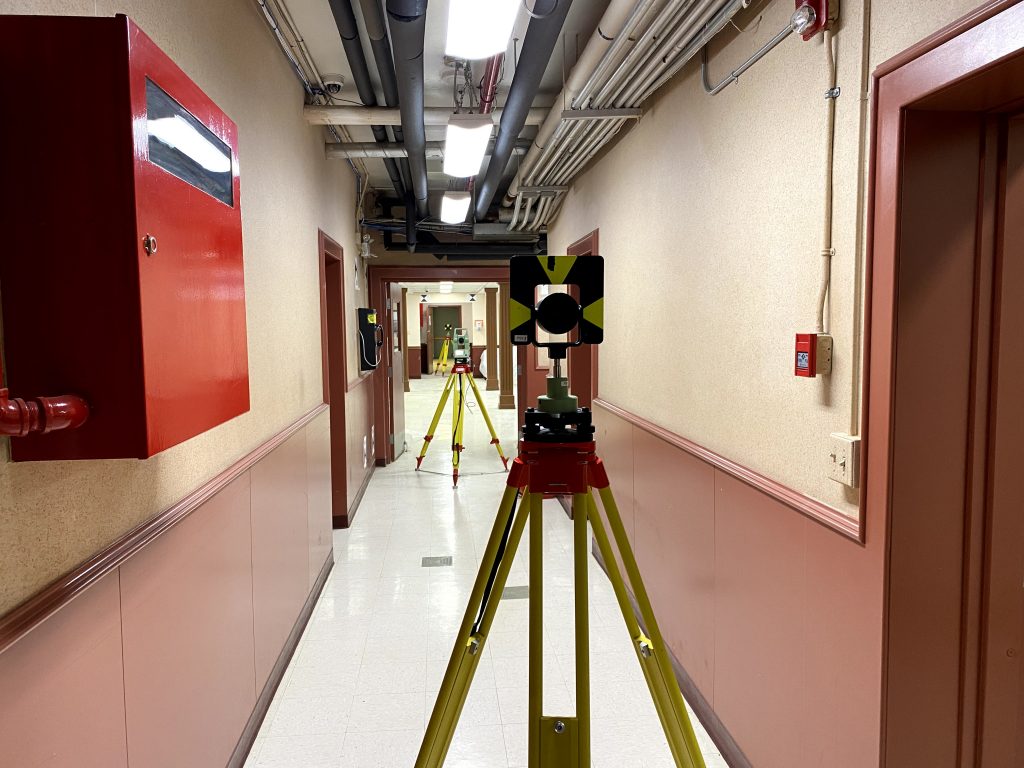
Old Sun Community College First Floor
The First Floor/Basement of Old Sun Community Coll…
Read more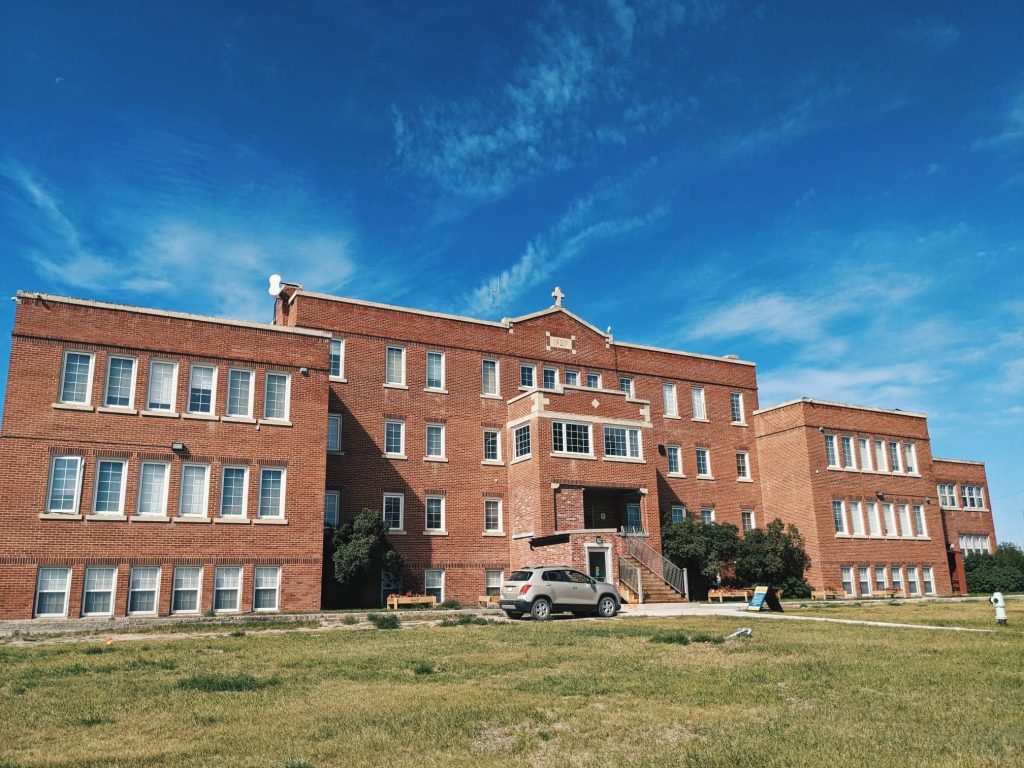
Exterior of Old Sun Community College
Old Sun Indian Residential School operated between…
Read more